12/01/2023
51st SCTM General Assembly - panel discussion "The role of local self-government association today - challenges and priorities"
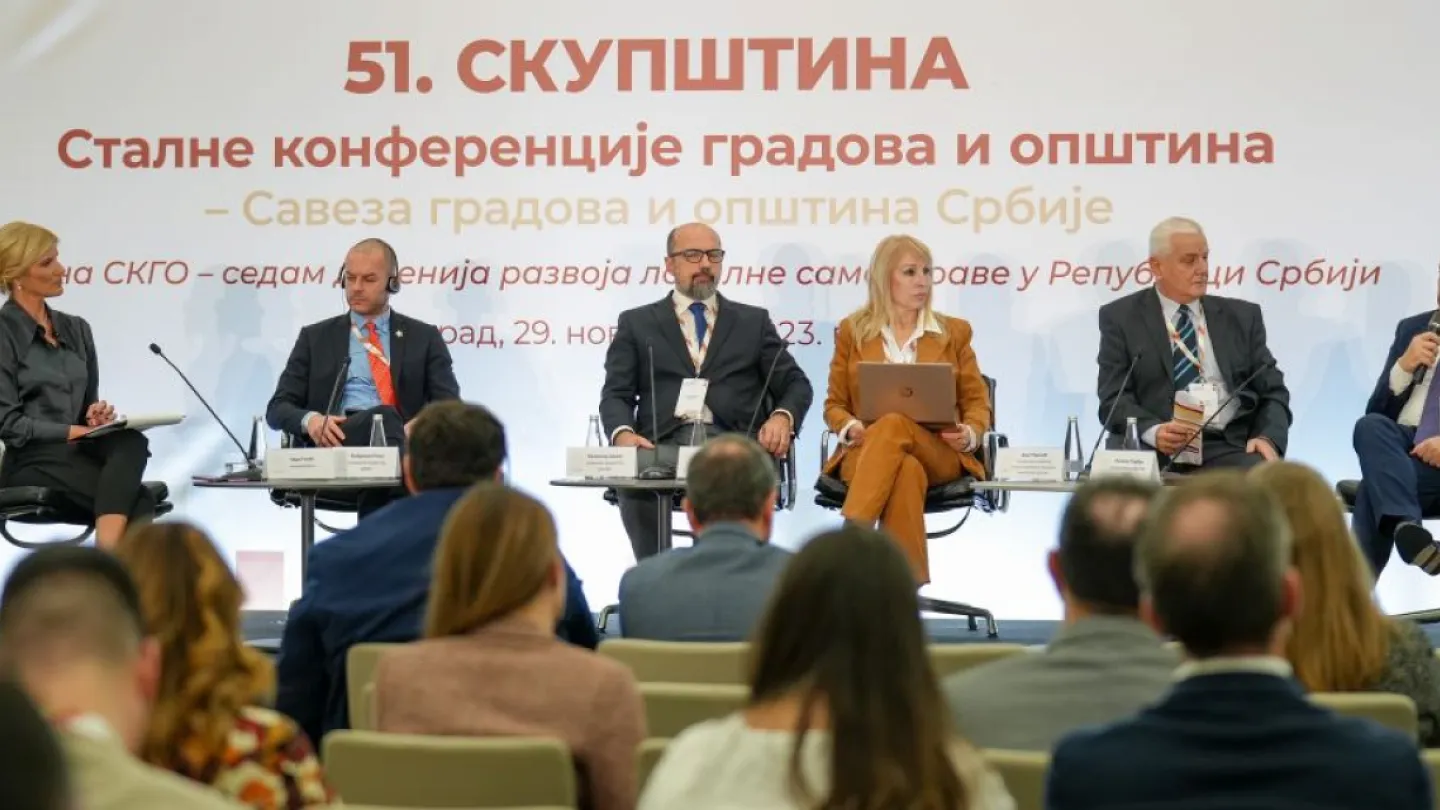
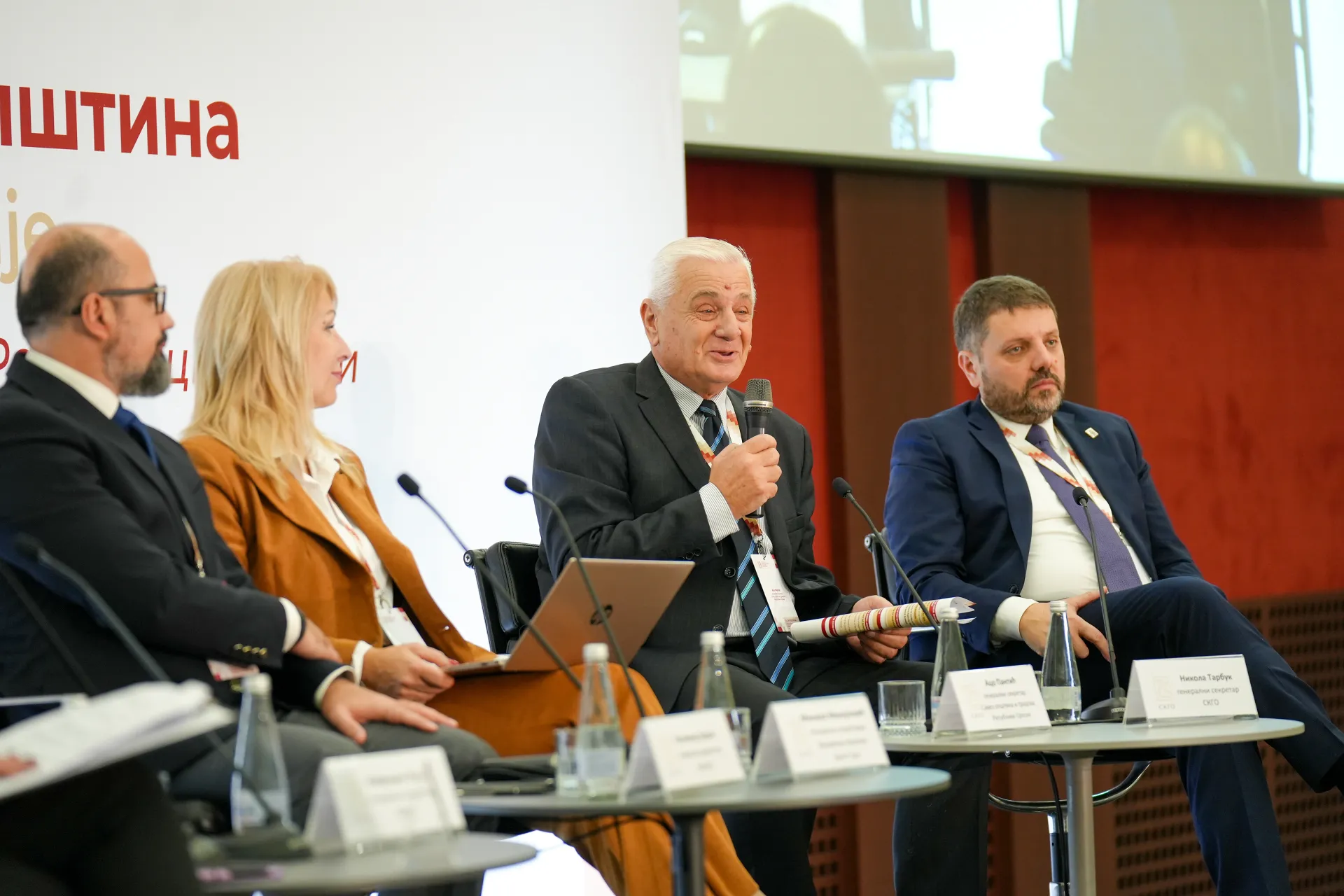
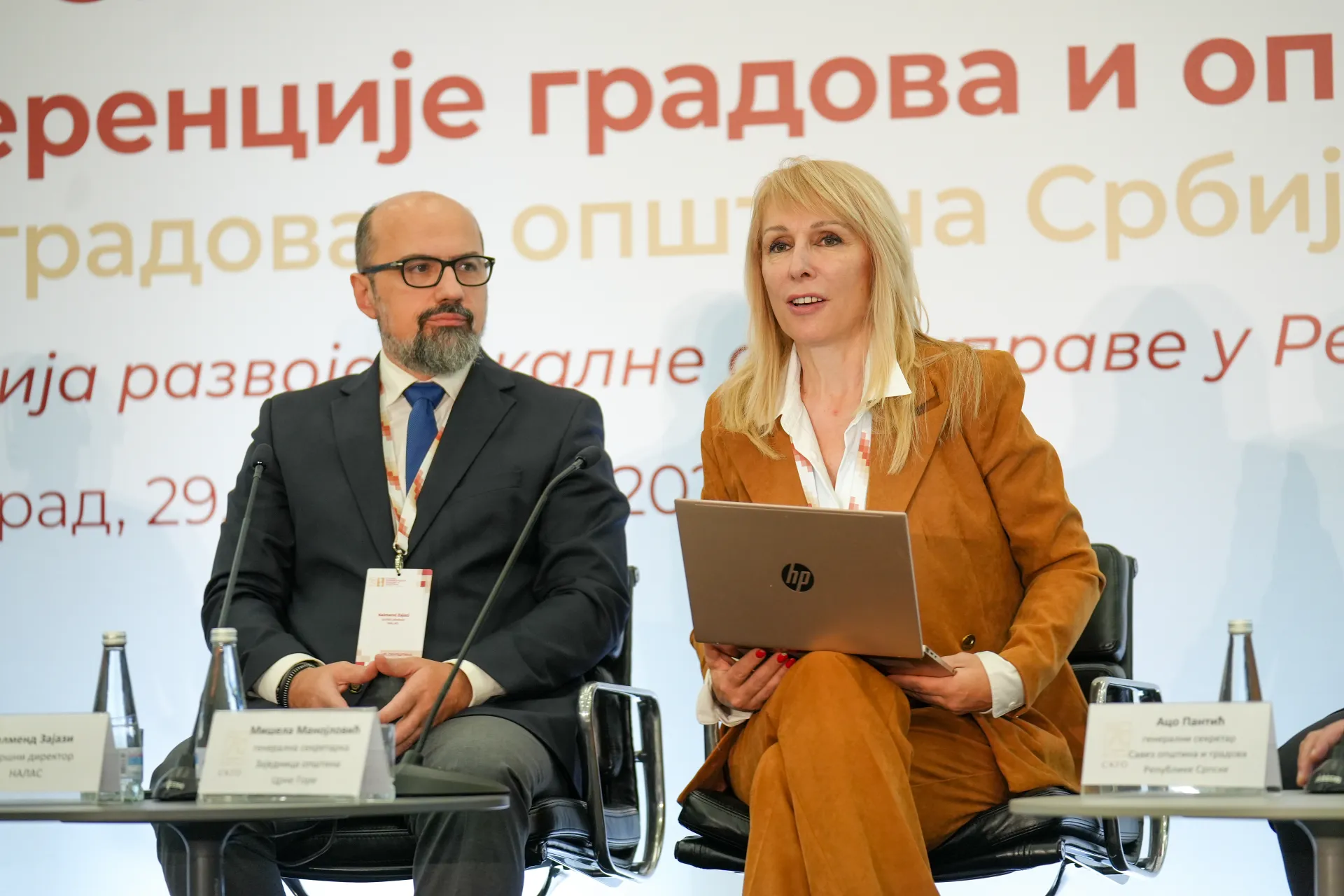
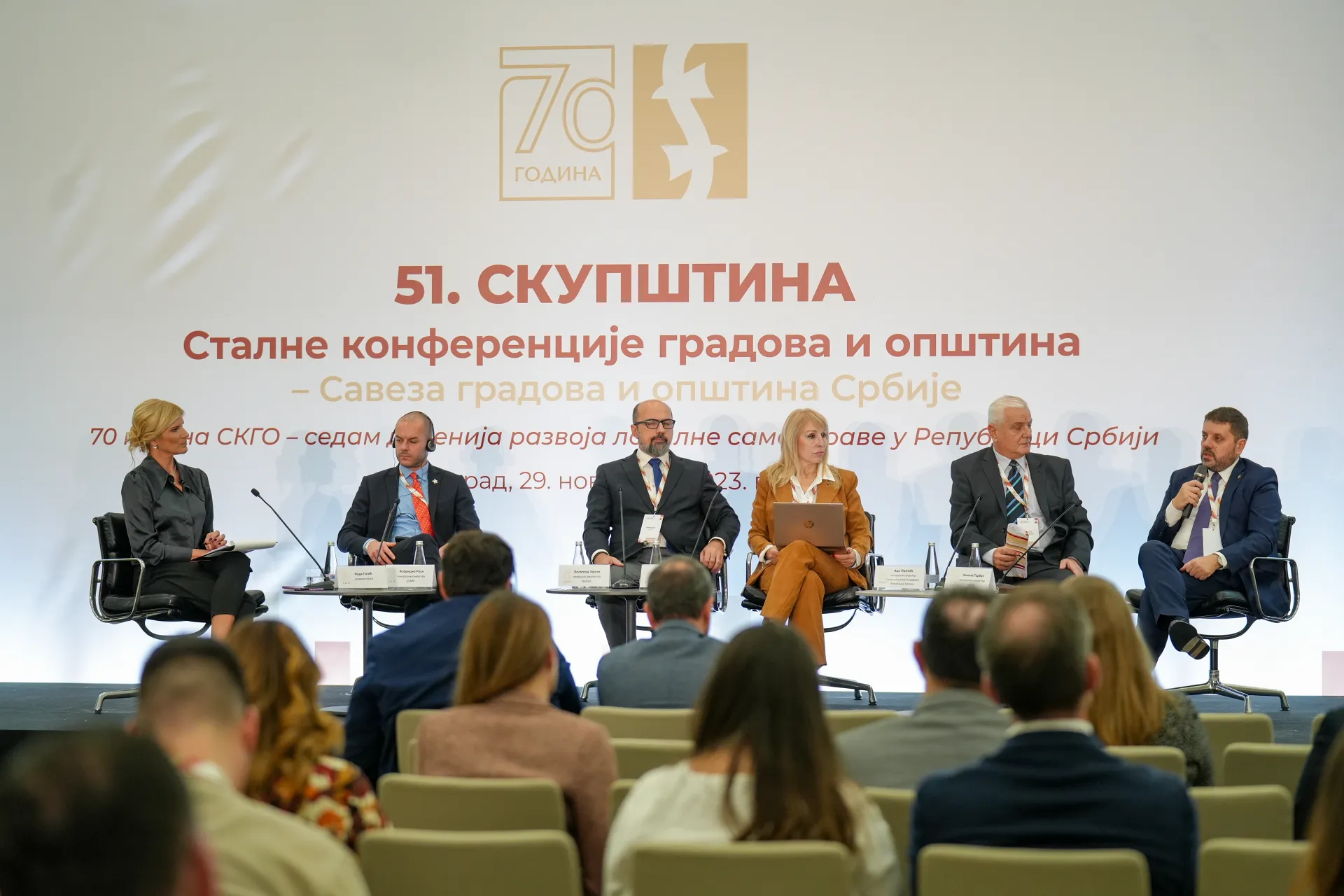
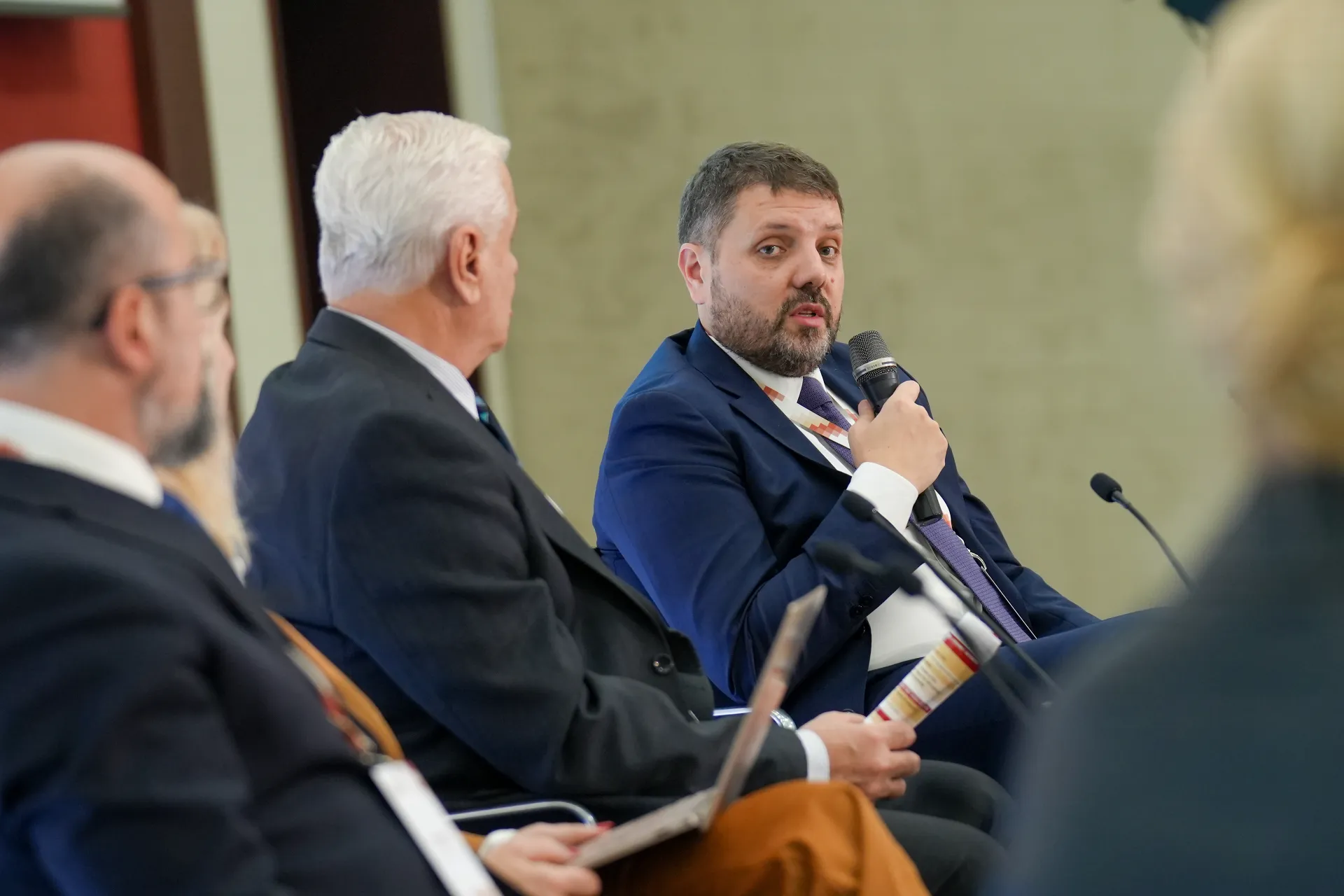
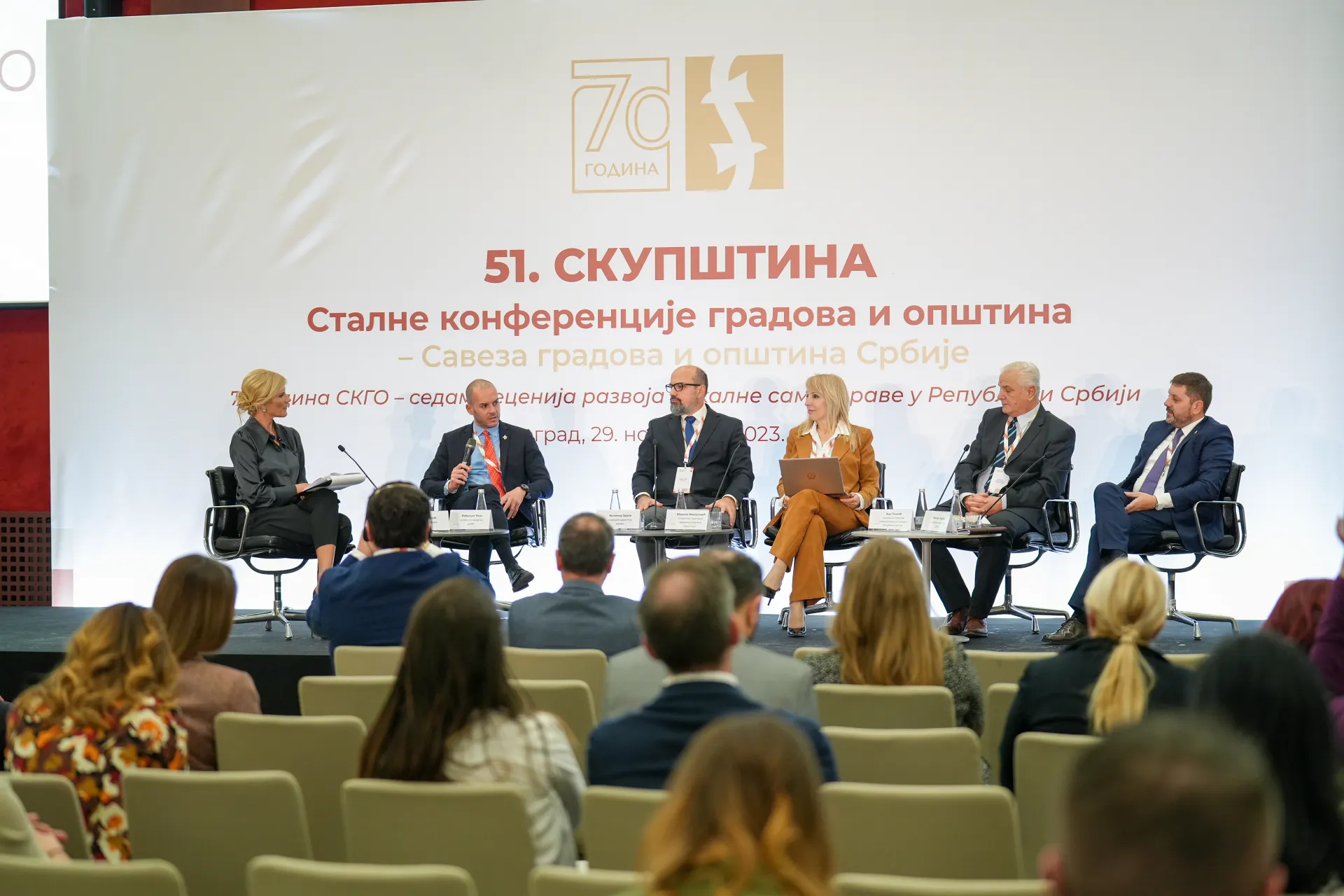
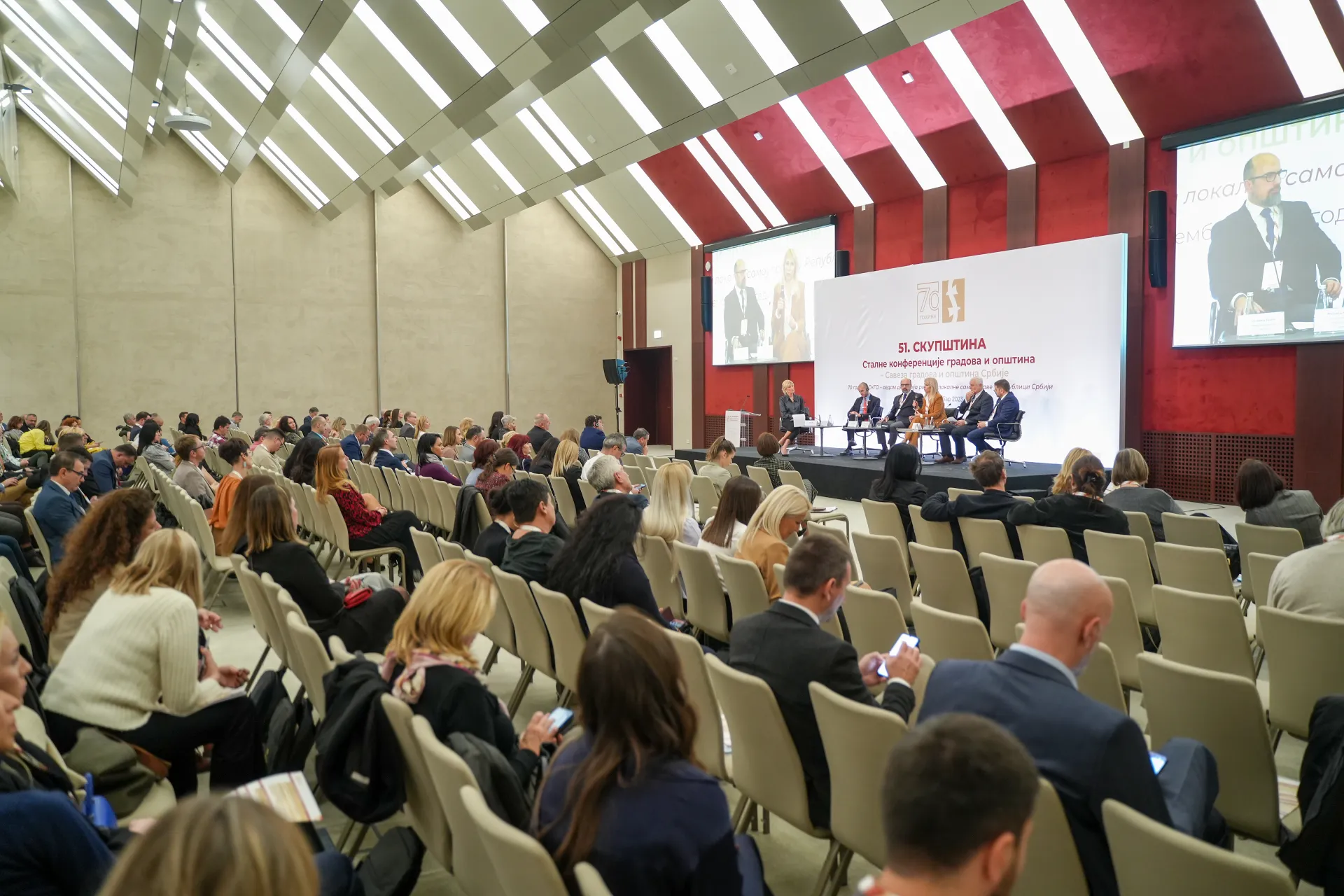
Panel discussion on the topic "The role of local self-government association today - challenges and priorities", held within 51st SCTM General Assembly, gathered representatives of European, regional and associations from the region.
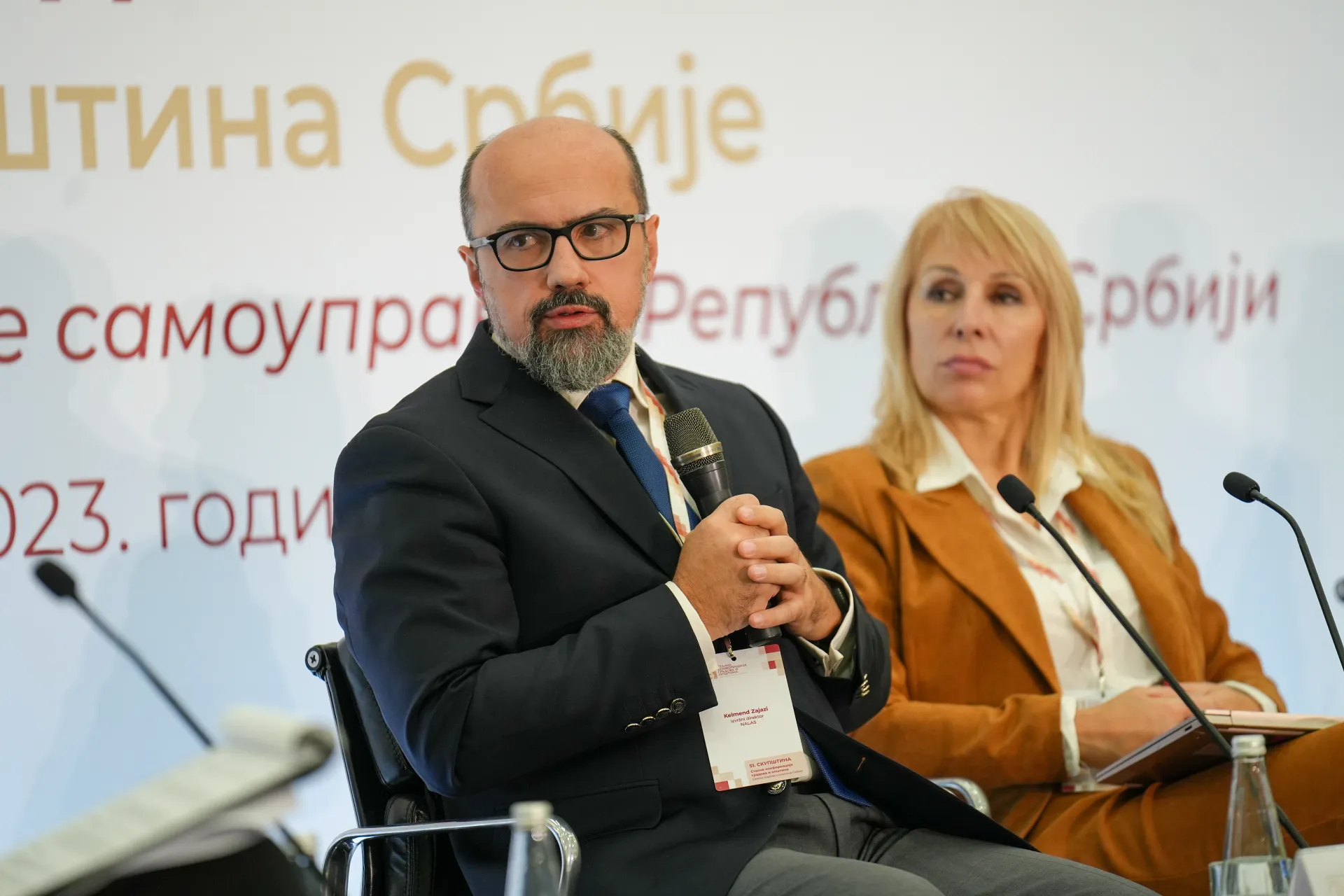
Panel participants were Fabrizio Rossi, Secretary General of the Council of European Municipalities and Regions (CEMR), Kelmend Zajazi, Executive Director of the Network of associations of local authorities of South-East Europe (NALAS), Mišela Manojlović, Secretary General of the Union of Municipalities of Montenegro, Aco Pantić, Secretary General of the Association of Local Authorities of Republic of Srpska and Nikola Tarbuk, Secretary General of SCTM.
Fabrizio Rossi, Secretary General of the Council of European Municipalities and Regions (CEMR) – “I have very much enjoyed the SCTM Work Report video, and particularly liked the final message – SCTM is your home. I would like to say – CEMR is home to Standing Conference of Towns and Municipalities”
“I must admit that I have noticed many similarities between SCTM and CEMR journeys. CEMR is a bit older, it was founded by few mayors-visionaries, who in a post war period believed that the reconstruction of Europe comes with bringing together towns, cooperation, building bridges between towns and municipalities across Europe”, Rossi stated and confirmed that the next Policy Committee of the Council of European Municipalities and Regions meeting will be held next year in Belgrade.
“We need good laws to make Europe, but we need good projects to make Europeans“
“CEMR represents you, towns and municipalities, we advocate for our common goals and purpose, and invest more and more efforts in developing new projects”, Rossi said and pointed out that advocacy as such is important, but it is also important to work directly on the ground through European projects.
“We never had this many data and information, and yet we know so little about what the future holds”
“The number one challenge is uncertainty. It is very hard to imagine our societies in the future. This uncertainty is a consequence of three factors – climate change together with migrations, then the rise of artificial intelligence and its impact on our daily life and the third is polarization within our societies“, Secretary General CEMR stated and explained that due to polarization, it is very rare to see constructive political dialogue, but that conflict is present much more often.
"The voice of CEMR is relevant"
"I can say that we have an important role in advocating for enlargement of European Union, with the fact that in the future we must focus more on this region," said Rossi and emphasized the need for and importance of new European projects that local authorities should propose, because no other actor can be a better leader in developing new projects.
Rossi emphasized the Council's commitment to further work with member associations, towns, and municipalities, providing new tools, new data, new capacities needed for facing with challenges. He emphasized the importance of the next Policy Committee of the Council of European Municipalities and Regions meeting, which will be held next year in Belgrade, with the enlargement and EU integration in the Western Balkans region as central themes.
Kelmend Zajazi, Executive Director of the Network of associations of local authorities of South-East Europe (NALAS) – "This jubilee is truly admirable, especially the fact that even at that time there was an association bringing together local authorities and left a great legacy, which many European countries would have envy"
"When there is a strong association, whether decentralization is good or bad, there is a promise that it will certainly be better in the future," said Zajazi and emphasized the importance of a healthy dialogue between local officials who directly represent citizens, and the central government, to build a better and a more efficient system with modernized services.
"Decentralization in the region was very strong in the late nineties, and at the beginning of the 2000s, through a noticeable growth of competences"
"In observing and collecting data on decentralization, it was a hopeful period. However, what started then, and continues, is that decentralization was not accompanied by the transfer of resources as it should have been", Zajazi pointed out and added that public services, despite all efforts, are still not good enough. He explained that several factors hinder the process of decentralization in South-East Europe. In the first place, the economic crisis has set decentralization back a few steps, and the EU integration process in most countries, especially in those where negotiations last too long, because the needs of local self-governments are "on hold" for that time.
"We are witnessing the incredible development of associations"
"I am very proud when I see the reports of our members and what they have achieved with their extraordinary work and when I see all these photos, all those meetings in which local representatives participated and identified their problems and needs to which the associations then respond", Zajazi pointed out and emphasized that during development of the Strategic Plan of this Network, the national associations expressed the need for their further strengthening and capacity building due to new areas of work, such as digitalization, climate change, and green agenda.
Zajazi described the modalities in which NALAS fosters cooperation between associations, mediating the exchange of experiences, knowledge and arguments needed for negotiations with national governments. Also, based on the models prepared by its members, NALAS develops thematic models at the regional level, and enables the exchange of expertise and practitioners from different countries. Finally, the important role of NALAS is to create conditions in which local governments are directly involved in pre-accession processes.
Nikola Tarbuk, Secretary General of SCTM - "SCTM is not only an association of towns and municipalities from today's Republic of Serbia, it is an association of towns and municipalities from all former republics that were part of Yugoslavia"
"When you look at our exhibition "70 years of SCTM", from today's perspective, that period is truly awe-inspiring, all those generations of people who have passed through the administration and political bodies, put before us the obligation not to falter in what we do", said Tarbuk and pointed out that SCTM is an organization that from the very beginning was created with the idea that people learn from each other, help each other.
"Decentralization is transfer of responsibilities for managing daily life of citizens"
"SCTM has, together with the Government of the Republic of Serbia, identified several key priorities, namely the systemic reform of local self-governments, the reform of the financial system and further financial decentralization, capacity building, and finally the development of services that local self-government should implement," Tarbuk stated and explained several key lines of action for the coming year.
"The monotypic system of local self-government makes decentralization difficult"
"You cannot expect that municipalities with such great differences can have the same capacities. The idea is to discuss the modalities so that those municipalities with greater capacities take on new responsibilities, and build the capacities of smaller municipalities with the main goal of keeping those competences as close as possible to the citizens", SCTM Secretary General emphasized and added that further activities also relate to defining the steps for reforming the system with the aim of further fiscal decentralization, human resources, knowledge, capacities, competences improvement, and finally provision of quality services to citizens.
"Preparation is key to any reform"
"It is not enough to pass a law, but implementation in practice must be planned in advance", Tarbuk pointed out and emphasized the importance of preparing and providing support in accordance with the needs of each of the members.
Mišela Manojlović, Secretary General of the Union of Municipalities of Montenegro - "Thank you for the opportunity to exchange experiences and good ideas with colleagues from associations"
"As far as the priorities of our association, radical changes have taken place in Montenegro in the past three years in both local and state administration", said Mišela Manojlović and added that on one hand the changes really brought a completely new energy, but on the other hand, posed very serious challenges in the form of necessity to ensure a professional, more efficient, and economical administration.
"We are focused on securing grants from the EU and other funds"
"We managed to impose a solution in the Law on Local Self-Government Financing, according to which funds for pre-financing of donor projects are provided from the state budget", Manojlović pointed out and emphasized that with this a big obstacle was solved for small municipalities when applying, since they have the staff, but they do not have enough necessary funds.
Speaking about the potential for cooperation between associations in the region, Secretary General of the Union of Municipalities of Montenegro cited SCTM as an example of good practice in the process of local self-government reform, and that during negotiation processes of the Union and central authorities, referring to good solutions in the Republic of Serbia always gave results.
Aco Pantić, Secretary General of the Association of Local Authorities of Republic of Srpska - "Through dialogue with higher levels of government, the Association is trying to improve the position of municipalities and towns"
"In the Republika Srpska, we have 50 percent of municipalities and towns that are in the category of underdeveloped and extremely underdeveloped. Unfavorable demographic trends are particularly reflected in underdeveloped municipalities", Pantić said, citing the lack of capacity of local self-government units to absorb funds from EU programs, as well as the uneven level of local economic development in the Republic of Srpska.
"In the first place, continuous communication and cooperation are needed, but also your proactive attitude towards associations"
"Associations equally represent the interests of all municipalities and towns, but it seems to me that due to all the challenges, time, attention and care should be devoted to municipalities that are in the category of underdeveloped and extremely underdeveloped", stressed Pantić and added that inter-municipal cooperation should be increased, to learn from those who are better and to learn from good practice examples of other associations.
"SCTM is a resource center of knowledge and good practices for all associations in the region, and one of the ways of our cooperation is participation in your annual gatherings as a form of knowledge exchange and acquisition of good practices that we have the opportunity to see", Pantić pointed out.
Bearing in mind the Agreement signed between the Ministries for Local Self-Government of the two countries, Republika Srpska and Republic of Serbia, Aco Pantić proposed the creation of a framework plan for cooperation between the Association and SCTM. He also suggested organizing a joint session of the two presidencies of the two associations, as well as joint meetings of the thematic committees and networks of the two associations.
Nikola Tarbuk, Secretary General of SCTM – "Cooperation has no alternative"
Pointing out that the potential for cooperation is great, Nikola Tarbuk stated that in realizing the interests and satisfying the needs of citizens, as well as in the process of EU integration, there are various ways available for cooperation between local self-governments, but also between associations. He proposed a type of cooperation in the protection of river basins, which would include associations, but also local self-governments belonging to that eco-system from three countries - Republika Srpska, Montenegro and Serbia. He also expressed satisfaction with the opportunity to host the next Policy Committee of the Council of European Municipalities and Regions meeting in Belgrade next year. As he pointed out, this meeting will send a clear message that Serbia wants to be a member of the EU. More than two hundred delegates will gather at this meeting, which will be a good opportunity to discuss the role of local self-government in the EU integration process.